

ORAL-HYGIENE
Halitosis (Bad Breath): Causes, Treatments, and Prevention

This blog has been reviewed and approved by Dr. Stephanie Gans
Everyone experiences bad breath occasionally, but if you notice it daily, it may be time to re-evaluate your oral health routine.
In this article, we'll explore the causes of bad breath, its associated symptoms of bad breath, and various bad breath treatment options, detailing how to integrate them into your daily oral hygiene practices.
key Takeaways
TABLE OF CONTENTS
TABLE OF CONTENTS
What is Halitosis?
Bad breath, medically termed halitosis, primarily originates from bacterial accumulation in your mouth. These bacteria feed on residual food particles, dead cells, and proteins, multiplying and releasing foul-smelling gases. Concurrently, these bacteria contribute to plaque formation, a sticky film on your teeth that, if not regularly removed, can solidify into tartar.
Fortunately, once you identify the causes of bad breath, you can implement targeted steps for effective bad breath treatment and bad breath prevention.
Causes of Bad Breath
 Poor Oral Hygiene Inadequate brushing and flossing habits allow bacteria to proliferate, especially around the gumline and on the back of your tongue. If this buildup isn't removed daily, it can lead to plaque, tartar, and consequently, bad breath.
Overnight Bacteria Accumulation You might wonder why you wake up with bad breath even after brushing before bed. During sleep, bacteria multiply on your teeth, gums, and tongue. These bacteria consume amino acids from leftover food particles in your mouth, releasing sulfur compounds that result in unpleasant morning breath.
Dry Mouth Saliva plays a crucial role in preventing bad breath by rinsing away debris and food particles. If your body produces insufficient saliva—even if you are well-hydrated—you may have a condition known as dry mouth (xerostomia). Dry mouth can be triggered by specific medications or systemic medical conditions.
Symptoms of bad breath related to dry mouth include:
Poor Oral Hygiene Inadequate brushing and flossing habits allow bacteria to proliferate, especially around the gumline and on the back of your tongue. If this buildup isn't removed daily, it can lead to plaque, tartar, and consequently, bad breath.
Overnight Bacteria Accumulation You might wonder why you wake up with bad breath even after brushing before bed. During sleep, bacteria multiply on your teeth, gums, and tongue. These bacteria consume amino acids from leftover food particles in your mouth, releasing sulfur compounds that result in unpleasant morning breath.
Dry Mouth Saliva plays a crucial role in preventing bad breath by rinsing away debris and food particles. If your body produces insufficient saliva—even if you are well-hydrated—you may have a condition known as dry mouth (xerostomia). Dry mouth can be triggered by specific medications or systemic medical conditions.
Symptoms of bad breath related to dry mouth include:
- A sticky sensation in your mouth
- Thick saliva
- Difficulty chewing and swallowing
- Burning or tingling in your mouth
- Dry lips
Bad Breath Treatment and Prevention
 Once you identify the causes of bad breath, you can effectively address the problem and work towards preventing bad breath from recurring! Here are some top tips for bad breath treatment and prevention.
Brush Your Teeth At least Twice a Day The most effective bad breath treatment for odor caused by bacteria and plaque on your teeth is to brush twice daily using a stannous fluoride toothpaste and an electric toothbrush.
Floss Once a Day To eliminate as much food, plaque, and bacteria from between your teeth as possible, floss once daily using string floss or a floss pick.
Rinse with an Antibacterial Mouthwash Employ an antibacterial mouthwash to target bacteria in areas your toothbrush and floss cannot effectively reach.
Once you identify the causes of bad breath, you can effectively address the problem and work towards preventing bad breath from recurring! Here are some top tips for bad breath treatment and prevention.
Brush Your Teeth At least Twice a Day The most effective bad breath treatment for odor caused by bacteria and plaque on your teeth is to brush twice daily using a stannous fluoride toothpaste and an electric toothbrush.
Floss Once a Day To eliminate as much food, plaque, and bacteria from between your teeth as possible, floss once daily using string floss or a floss pick.
Rinse with an Antibacterial Mouthwash Employ an antibacterial mouthwash to target bacteria in areas your toothbrush and floss cannot effectively reach.Brush Your Tongue
 After you’ve finished brushing your teeth, take a moment to brush your tongue—especially the back. The rough surface of your tongue contains numerous crevices where odor-causing bacteria can accumulate, making it a crucial area to clean for bad breath prevention.
Visit Your Dentist Twice a Year Minimize bacterial, plaque, and tartar buildup, along with a host of other dental issues, by visiting your dentist at least twice annually.
Professional cleaning and examination will often contribute significantly to preventing bad breath from returning and will help ward off more serious dental problems like cavities, gum disease, and periodontitis.
Limit Caffeinated and Alcoholic Drinks To treat bad breath and help prevent bad breath recurrence, restrict your intake of caffeinated and alcoholic beverages, as well as sugary and acidic juices. Bacteria thrive on sugar, acid, and other chemicals. Consider these drinks as fuel for the bacteria that cause bad breath and plaque.
Chew Sugarless Gum Chewing sugarless gum is an excellent way to stimulate saliva production and keep your mouth moist (both of which assist your body in removing the bacteria and plaque that cause bad breath).
Although mints can temporarily freshen your breath, they may leave a sugary residue on your teeth.
Quit Smoking If you smoke, quitting is unequivocally the simplest solution. Tobacco damages gum tissue and provides sustenance for the bacteria that cause halitosis.
If you're struggling to quit independently, consult your doctor for potential options to help you cease smoking.
Change Your Diet Since certain foods can contribute to halitosis, an effective bad breath treatment involves making dietary adjustments.
If you’ve improved your oral hygiene and still not getting the result you’re satisfied with, consider these suggestions to improve your diet:
After you’ve finished brushing your teeth, take a moment to brush your tongue—especially the back. The rough surface of your tongue contains numerous crevices where odor-causing bacteria can accumulate, making it a crucial area to clean for bad breath prevention.
Visit Your Dentist Twice a Year Minimize bacterial, plaque, and tartar buildup, along with a host of other dental issues, by visiting your dentist at least twice annually.
Professional cleaning and examination will often contribute significantly to preventing bad breath from returning and will help ward off more serious dental problems like cavities, gum disease, and periodontitis.
Limit Caffeinated and Alcoholic Drinks To treat bad breath and help prevent bad breath recurrence, restrict your intake of caffeinated and alcoholic beverages, as well as sugary and acidic juices. Bacteria thrive on sugar, acid, and other chemicals. Consider these drinks as fuel for the bacteria that cause bad breath and plaque.
Chew Sugarless Gum Chewing sugarless gum is an excellent way to stimulate saliva production and keep your mouth moist (both of which assist your body in removing the bacteria and plaque that cause bad breath).
Although mints can temporarily freshen your breath, they may leave a sugary residue on your teeth.
Quit Smoking If you smoke, quitting is unequivocally the simplest solution. Tobacco damages gum tissue and provides sustenance for the bacteria that cause halitosis.
If you're struggling to quit independently, consult your doctor for potential options to help you cease smoking.
Change Your Diet Since certain foods can contribute to halitosis, an effective bad breath treatment involves making dietary adjustments.
If you’ve improved your oral hygiene and still not getting the result you’re satisfied with, consider these suggestions to improve your diet:
- Limit garlic, onions, and other strongly-scented foods.
- Restrict sugary, starchy foods and sugary drinks.
- Increase your consumption of fruits and vegetables, as they help cleanse your mouth and promote saliva production.
When to See a Dentist
 Bad breath can sometimes indicate an issue elsewhere in your body. If you experience chronic bad breath and your dental professional confirms no oral problems, seek an evaluation from your primary care physician.
Persistent bad breath can be a symptom of various conditions, including respiratory tract infections, chronic sinusitis or bronchitis, diabetes, or liver and kidney problems. It is crucial not to ignore this issue.
Bad breath can sometimes indicate an issue elsewhere in your body. If you experience chronic bad breath and your dental professional confirms no oral problems, seek an evaluation from your primary care physician.
Persistent bad breath can be a symptom of various conditions, including respiratory tract infections, chronic sinusitis or bronchitis, diabetes, or liver and kidney problems. It is crucial not to ignore this issue.Overcome Bad Breath with Crest and Oral-B!
 No one wants bad breath. Proper and ongoing dental hygiene can keep your breath fresh and your smile radiant. The health of your tongue, gums, and teeth is directly related to your breath. Here are our Crest and Oral-B recommendations for oral hygiene and to help bad breath:
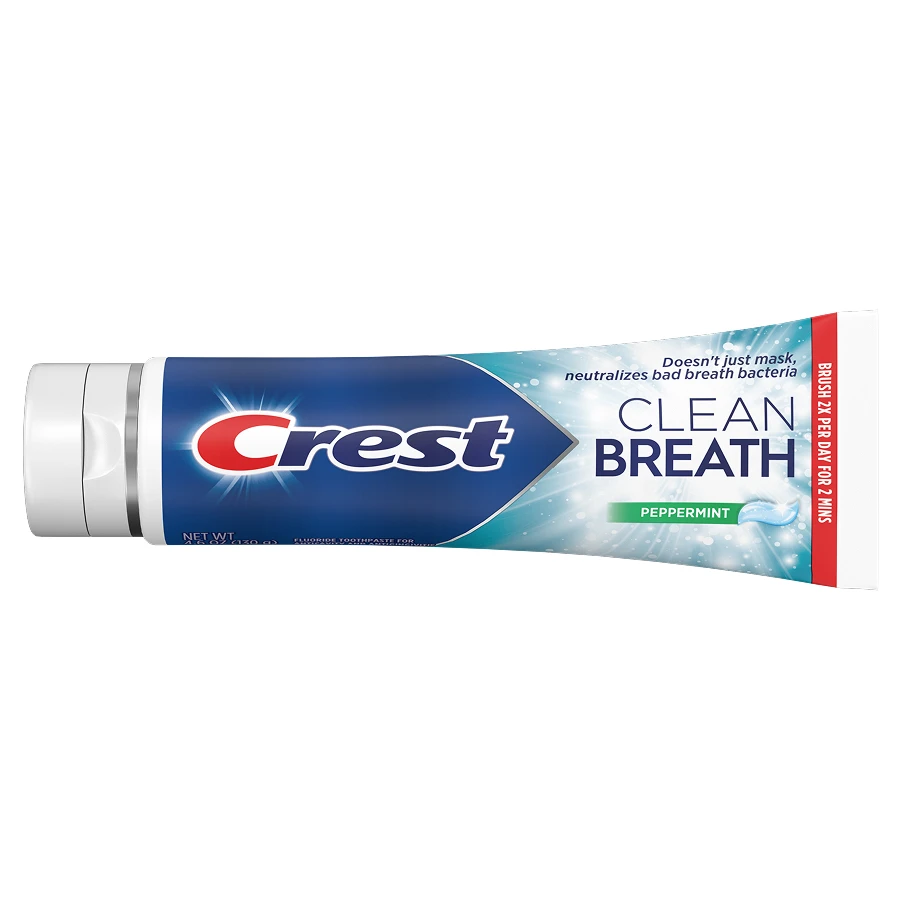
- Start your routine with Crest Clean Breath Toothpaste. This stannous fluoride formula works around the clock, actively fighting the bacteria that cause cavities and bad breath, so you enjoy a long-lasting, fresh, and clean feeling.
- Elevate your freshness with a mouthwash. These are essential for reducing odor-causing bacteria and neutralizing Volatile Sulfur Compounds (VSCs) – the main culprits behind bad breath. Reach for Crest Mouthwash not just for superior cavity and tartar protection, but to complete your routine with an invigorating, long-lasting clean and fresh feeling.
- The Oral-B iO electric toothbrush, for instance, removes significantly more plaque than a manual brush, attacking the root cause of tooth decay, gum disease and bad breath. Experience a truly deep clean that leaves your smile feeling remarkably fresh and vibrant.
- Oral-B iO Ultimate Clean brush head is engineered with unique bristle lengths to reach deep into the hidden spaces between your teeth, dislodging stubborn plaque and the odor-causing bacteria that love to hide there. This ultimate clean is key to a perpetually fresh and healthy smile.
- Complete your oral care ritual by flossing at least once daily with Oral-B floss. Flossing is crucial for reaching the tight spaces where food particles and plaque accumulate. By meticulously removing these odor sources, you ensure every surface of your teeth is clean, contributing to an undeniably fresh and clean smile
TABLE OF CONTENTS
TABLE OF CONTENTS

FAQS

Do cavities cause bad breath?
Bad breath ultimately results from bacterial buildup, and cavities can exacerbate the problem by creating concealed spaces where bacteria can thrive. It is important to see your dentist promptly if you suspect you may have a cavity.
Can bad breath be cured?
Bad breath treatment is possible, depending on the causes of bad breath, but it may not always disappear completely. Most often, adhering to a good oral hygiene routine is sufficient to keep it at bay.
• Brush with a stannous fluoride toothpaste and an electric toothbrush at least twice daily.
• Floss at least once a day to remove food and bacteria between your teeth.
• Rinse with a mouthwash to eliminate bacteria in hard-to-reach areas.
We also recommend brushing or scraping your tongue and limiting pungent foods (like onions, garlic, and spicy foods).
• Brush with a stannous fluoride toothpaste and an electric toothbrush at least twice daily.
• Floss at least once a day to remove food and bacteria between your teeth.
• Rinse with a mouthwash to eliminate bacteria in hard-to-reach areas.
We also recommend brushing or scraping your tongue and limiting pungent foods (like onions, garlic, and spicy foods).
Why won’t my bad breath go away?
Bad breath that persists even with a diligent oral hygiene routine could signal more serious dental or medical issues, including:
• Gum disease
• Gum abscesses
• Gingivitis
• Periodontitis
• Dry mouth
• Diabetes
• Liver or kidney disease
If you experience chronic halitosis that doesn’t respond to home remedies, consult your doctor or dentist to investigate any underlying problems.
• Gum disease
• Gum abscesses
• Gingivitis
• Periodontitis
• Dry mouth
• Diabetes
• Liver or kidney disease
If you experience chronic halitosis that doesn’t respond to home remedies, consult your doctor or dentist to investigate any underlying problems.
Sources
- https://my.clevelandclinic.org/health/diseases/17771-bad-breath-halitosis
- https://www.mayoclinic.org/diseases-conditions/bad-breath/symptoms-causes/syc-20350922
- https://www.hopkinsmedicine.org/health/conditions-and-diseases/halitosis-bad-breath
- https://www.health.harvard.edu/staying-healthy/halitosis-common-causes-effective-treatments-and-powerful-prevention-for-bad-breath
- Adam, R. E., et al. (2025). A randomized clinical trial evaluating plaque and gingivitis effects of an entry-tier oscillating-rotating electric toothbrush. Journal of Dental Hygiene, 99(5), 6–17. https://jdh.adha.org/content/99/5/6
- Cheng, R., et al. (2014). Breath and plaque prevention with cetylpyridinium chloride rinses: clinical meta-analysis. Journal of Dental Research, 93, 573. https://iadr.abstractarchives.com/abstract/43am-185497/breath-and-plaque-prevention-with-cetylpyridinium-chloride-rinses-clinical-meta-analysis
- Zsiska, M., et al. (2021). Investigation of oral malodor prevention by dentifrices as measured by VSC reduction. Journal of breath research, 15(3), 10.1088/1752-7163/abf209. https://doi.org/10.1088/1752-7163/abf209